
There is no single “anti-cancer diet” that guarantees protection against prostate cancer. However, there are well-supported lifestyle recommendations that may support overall health, help maintain a healthy body weight, and probably reduce the risk of a more aggressive course of the disease.
In this article, we explain what is known about diet, body weight, physical activity, supplements, and intermittent fasting in the context of prostate cancer. This text does not replace diagnosis or treatment. If you have an abnormal PSA result, urinary symptoms, a family history of cancer, or would like to discuss prevention, start with a urological consultation.
Author: Piotr Rak, MD, PhD | Medical review: Jakub Krukowski, MD, PhD, urologist | Publication date: 24.06.2026 | Last updated: 24.06.2026
Prostate cancer and diet — why does this topic raise so many questions?
Prostate cancer is one of the most common cancers in men. It is therefore not surprising that patients ask whether they can reduce their risk through diet, supplements, eliminating sugar, limiting meat, or intermittent fasting. These are important questions, but they require a careful answer.
Diet does not work like a single medicine. It is not possible to say that one product “protects against prostate cancer” and another “causes cancer”. Studies usually assess whole dietary patterns, body weight, physical activity, lifestyle, genetic factors, age, metabolic diseases, and the way diagnosis is performed. That is why it is most reasonable to talk not about a miracle diet, but about a lifestyle that supports metabolic health and may reduce part of the risk.
The key message is simple: diet may be part of prevention and treatment support, but it does not replace PSA testing, urological consultation, imaging diagnostics, biopsy, or oncological treatment if these are needed.
“The biggest mistake is promising a patient that diet can replace diagnostics. Healthy eating, body weight, and physical activity are very important, but prostate cancer requires PSA monitoring, urological examination, and a reasonable assessment of risk.”
— Piotr Rak, MD, PhD
What matters most: body weight and metabolic health
In the context of prostate cancer, body weight is particularly important. Overweight, obesity, abdominal obesity, insulin resistance, type 2 diabetes, and a sedentary lifestyle create a metabolic environment that may promote inflammation, hormonal disturbances, and a worse prognosis in many chronic diseases.
This does not mean that every overweight man will develop prostate cancer, or that a slim person is completely safe. It means that maintaining a healthy body weight is one of the most reasonable and well-supported goals of preventive healthcare.
In practice, it is worth paying attention to:
- waist circumference and abdominal obesity,
- glucose levels and insulin resistance,
- blood pressure,
- lipid profile,
- regular physical activity,
- sleep quality,
- alcohol intake,
- the proportion of ultra-processed food in the diet.
These are not recommendations “only for the prostate”. They are the foundations of prevention of cardiovascular disease, diabetes, some cancers, and general metabolic ageing.
Which dietary pattern is the most reasonable?
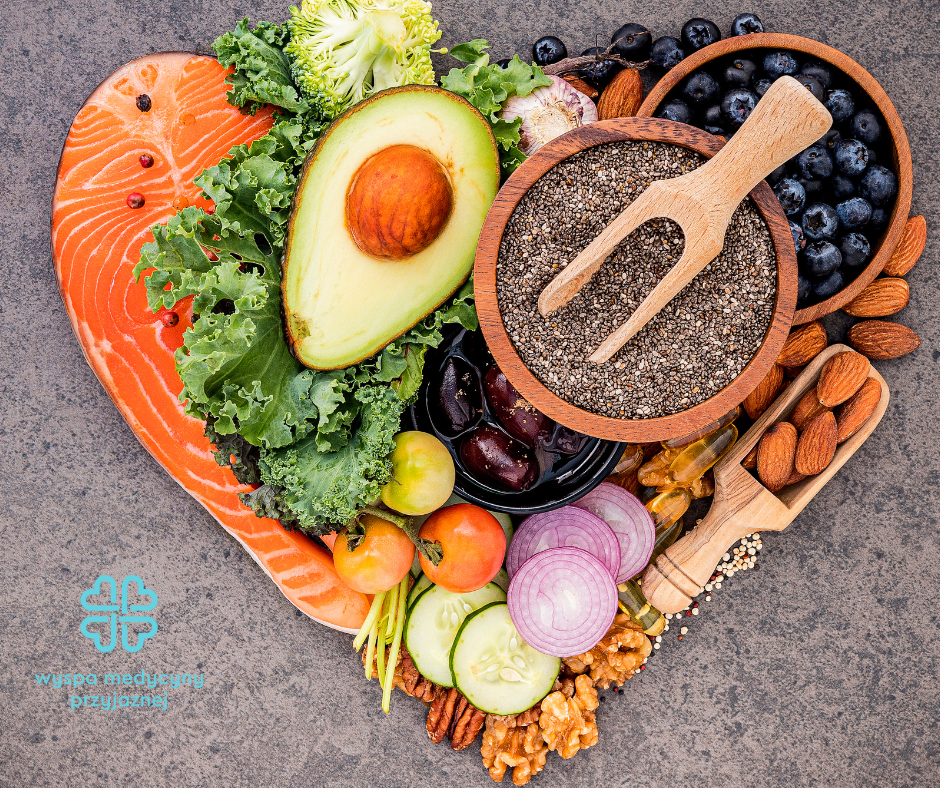
The most practical dietary model is one based on minimally processed foods, with plenty of vegetables, fruit, legumes, whole grains, nuts, olive oil, fish, and an adequate protein intake. This is often referred to as a Mediterranean diet or a plant-forward Mediterranean diet.
In everyday life, the goal is not a perfect menu, but a repeatable pattern:
- more vegetables, especially colourful ones,
- fruit instead of sweets as a frequent choice,
- whole grains instead of refined grain products,
- legumes several times a week,
- fish, nuts, seeds, and olive oil as sources of beneficial fats,
- less red and processed meat,
- less ultra-processed food, fast food, sweetened drinks, and alcohol,
- an adequate amount of protein, especially in older men and patients undergoing oncological treatment.
This approach makes sense not because a single ingredient “kills cancer cells”, but because it improves the quality of the diet, helps control body weight, reduces metabolic burden, and supports the health of the whole body.
Diet in prostate cancer prevention — practical points
| Worth increasing | Worth limiting | Why? |
|---|---|---|
| vegetables, fruit, legumes, whole grains | ultra-processed food | better diet quality, more fibre and micronutrients |
| fish, olive oil, nuts, and seeds | excess saturated fats and fried foods | support for metabolic and cardiovascular health |
| regular meals adjusted to activity | snacking on sweets and sweetened drinks | easier control of body weight and blood glucose |
| good-quality protein sources | frequent processed meat | protection of muscle mass, especially in older men |
| water and unsweetened drinks | alcohol as a daily habit | fewer liquid calories and lower metabolic burden |
Does a plant-based diet protect against prostate cancer?
A more plant-based diet may be beneficial if it means more vegetables, fruit, legumes, whole grains, nuts, and less ultra-processed food. However, this does not mean that every man has to become strictly vegan.
The quality of the diet is most important. A plant-based diet built on fries, sweets, white bread, and sweetened drinks will not be protective. On the other hand, a Mediterranean diet with a predominance of plant foods, fish, olive oil, and limited red meat can be a very reasonable dietary model.
In practice, it is worth thinking simply: not “all or nothing”, but shifting the proportions of the plate towards plant-based and minimally processed products.
Meat, dairy, calcium — where is the reasonable limit?
Many oversimplifications have grown around meat, dairy, and calcium. There is no need to frighten patients that a single product “causes prostate cancer”. It does make sense, however, to limit frequent consumption of processed meat, excess red meat, and a very high-calorie diet that promotes weight gain.
In the case of calcium and dairy, the data are more complex. Some analyses suggest a possible association between very high calcium intake or high dairy intake and prostate cancer risk, but this is not a simple relationship and does not mean that every man should completely eliminate dairy.
A reasonable practice is to:
- avoid unnecessarily high doses of calcium from supplements,
- avoid using “prostate supplements” without indications,
- treat dairy as part of the diet, not its foundation,
- take care of bone health, especially if the patient is receiving hormonal treatment for prostate cancer,
- discuss calcium and vitamin D supplementation with a doctor if osteopenia, osteoporosis, or androgen deprivation therapy is present.
Lycopene, tomatoes, green tea, selenium, vitamin E — what about supplements?
Patients often ask about lycopene, tomatoes, green tea, selenium, vitamin E, pomegranate, curcumin, or ready-made “prostate supplements”. Two things must be distinguished: eating foods rich in nutrients and taking concentrated supplements.
Tomatoes, vegetables, berries, green tea, and spices may be part of a healthy diet. The problem begins when a patient expects a capsule to replace healthy eating, physical activity, or diagnostics. Many studies on individual supplements have not confirmed clear protection against prostate cancer.
Particular caution is advisable with high-dose supplements. For example, large studies on selenium and vitamin E did not confirm their effectiveness in prostate cancer prevention, and for some supplements, signals of potential risk appeared. Therefore, supplementation should result from a deficiency or a specific indication, not from an advertising slogan.
“Patients often ask about supplements for the prostate. My answer is simple: first PSA, medical history, examination, and risk assessment. A supplement cannot replace diagnostics, and a healthy diet is more important than a single capsule.”
— Jakub Krukowski, MD, PhD, urologist
Intermittent fasting and fasting — do they reduce the risk of prostate cancer?
Intermittent fasting and fasting-mimicking diets are being intensively studied, including in the context of metabolic diseases and oncology. Mechanistically, this sounds interesting: improved insulin sensitivity, body weight reduction, effects on IGF-1, inflammation, and cellular metabolism.
However, it must be clearly stated: at present, it cannot be honestly claimed that intermittent fasting prevents prostate cancer or treats prostate cancer. There are small pilot studies and metabolic data, but this is not a standard method of cancer prevention or a method that replaces treatment.
Fasting may be risky for some patients, especially people:
- with underweight or weight loss,
- undergoing oncological treatment,
- with diabetes treated with insulin or hypoglycaemic medications,
- with kidney, liver, or heart disease,
- with eating disorders,
- at an older age and at risk of muscle loss.
If a patient wants to use intermittent fasting, it is safest to treat it as one of the methods of weight control, not as “anti-cancer therapy”. In the case of diagnosed prostate cancer or hormonal treatment, the decision should be discussed with a doctor and a clinical dietitian.
Diet after a prostate cancer diagnosis — what matters most?
After a prostate cancer diagnosis, diet has different goals than prevention alone. Maintaining muscle mass, preventing abdominal obesity, good treatment tolerance, glucose, blood pressure and lipid control, and bone protection are important, especially if the patient is receiving hormonal treatment.
Extremes should be avoided in patients undergoing oncological treatment. Restrictive diets, prolonged fasting, eliminating many food groups, or uncontrolled supplements may worsen nutritional status, increase fatigue, and make treatment more difficult.
Safer goals are to:
- maintain or gradually improve healthy body weight,
- protect muscles through adequate protein intake and resistance exercise,
- eat plenty of vegetables and whole grain products,
- avoid excess alcohol, sugar, and ultra-processed food,
- monitor vitamin D and bone health according to medical recommendations,
- consult supplements with a doctor, especially during oncological treatment.
What besides diet actually affects prevention?
Diet is important, but it is not the only element. For a man who cares about prostate health, testing and risk assessment are also important. Prostate cancer often causes no symptoms for a long time, so feeling well does not rule out disease.
It is worth discussing with a urologist:
- when to perform a PSA test,
- how to interpret PSA in relation to age and prostate size,
- whether prostate, breast, ovarian, or pancreatic cancer occurred in the family,
- whether digital rectal examination is needed,
- whether there are indications for prostate MRI,
- whether urinary symptoms result from benign prostate enlargement, inflammation, or require further diagnostics.
At Wyspa Medycyny Przyjaznej, you can start diagnostics with a urological consultation. Consultations are provided, among others, by Jakub Gondek, MD, Jakub Krukowski, MD, PhD, and Dr Jakub Kłącz.
Key conclusions
| Is there a diet that prevents prostate cancer? | There is no diet that provides a guarantee. However, there are dietary and lifestyle patterns that support general prevention. |
| What makes the most sense? | healthy body weight, physical activity, Mediterranean or plant-forward Mediterranean diet |
| Do supplements protect the prostate? | They should not be treated as reliable prevention. Use only when indicated or in case of deficiency. |
| Does intermittent fasting treat or prevent cancer? | There is no evidence for this. It may help with weight control in selected people, but it does not replace treatment. |
| What should not be skipped? | PSA, urological consultation, assessment of family risk, and diagnostics in case of concerning symptoms |
Frequently asked questions
Can diet prevent prostate cancer?
There is no diet that guarantees protection against prostate cancer. However, a healthy dietary pattern, healthy body weight, and physical activity may support prevention and reduce the risk of some chronic diseases.
What diet is best for the prostate?
The most reasonable model is a Mediterranean or plant-forward Mediterranean diet: plenty of vegetables, fruit, legumes, whole grains, olive oil, nuts, fish, and little ultra-processed food.
Does lycopene from tomatoes protect against prostate cancer?
Tomatoes may be part of a healthy diet, but lycopene should not be treated as reliable prevention or treatment of prostate cancer. Study data are inconclusive, especially for supplements.
Is it worth taking selenium or vitamin E for the prostate?
It is not advisable to use such supplements “preventively” without indications. Large studies have not confirmed that selenium and vitamin E prevent prostate cancer, and high-dose supplementation may be harmful.
Does intermittent fasting reduce the risk of prostate cancer?
There is not enough evidence to claim this. Intermittent fasting may be one method of weight control in selected people, but in oncological patients it requires caution and medical consultation.
When should I see a urologist?
It is worth seeing a urologist if PSA is abnormal, urinary symptoms occur, there is blood in the urine, bone pain, family history, or after the age of 50 to discuss preventive testing.
Would you like to discuss PSA, family risk, or prostate cancer prevention?
Diet is important, but it does not replace diagnostics. Start with a urological consultation and assessment of your individual risk.
Book a urological consultation →Summary
Diet matters in preventive healthcare, but it is not a protective shield against prostate cancer. The strongest practical message concerns maintaining a healthy body weight, regular physical activity, and a healthy dietary pattern based on minimally processed foods.
It is not worth basing prevention on single supplements, fashionable fasting trends, or extreme diets. It is better to build a daily dietary model that helps control body weight, blood glucose, blood pressure, lipids, and nutritional status.
In the case of prostate cancer, PSA, urological consultation, family risk assessment, reasonable diagnostics, and treatment according to current indications are just as important as diet. Healthy eating can support the body, but it should not delay contact with a doctor.
Sources and medical context:
- World Cancer Research Fund / AICR — Diet, nutrition, physical activity and prostate cancer
- American Cancer Society — How to prevent prostate cancer?
- National Cancer Institute — Prostate Cancer, Nutrition, and Dietary Supplements
- National Cancer Institute — SELECT trial: Selenium and Vitamin E
- Fay-Watt et al. — Fasting mimicking diet in prostate cancer patients: pilot study
This article is for informational purposes only and does not replace medical, dietary, or oncological consultation. Diet, supplementation, intermittent fasting, and lifestyle changes should be adjusted to age, body weight, comorbidities, current treatment, and individual risk. Abnormal PSA, blood in the urine, bone pain, weight loss, or warning symptoms require medical assessment.