
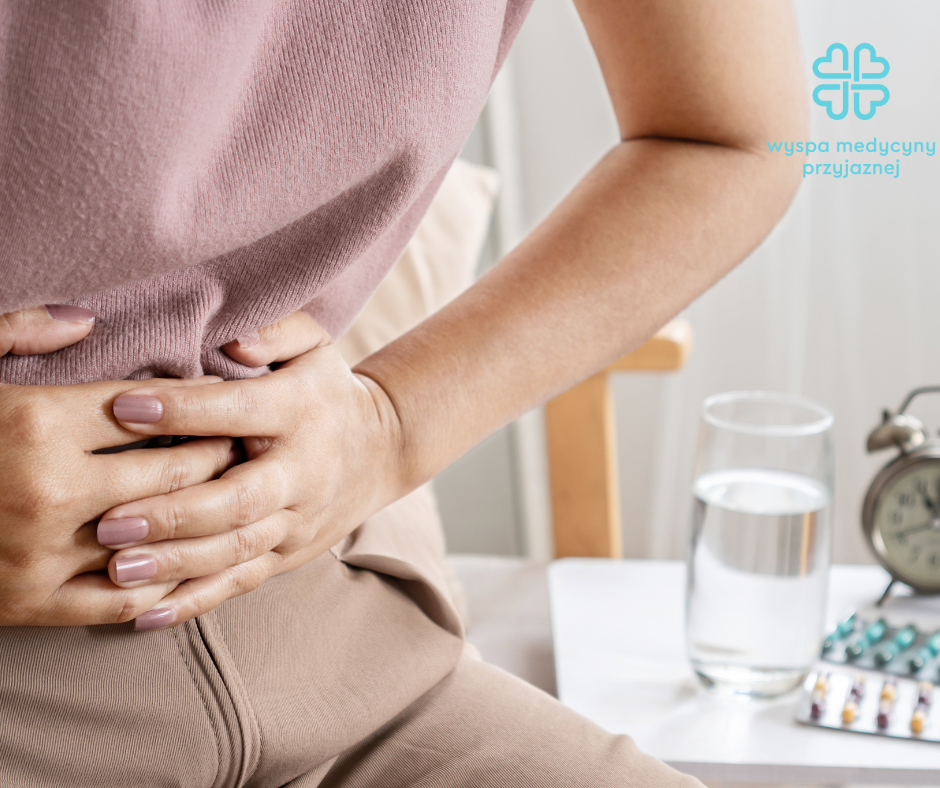
Irritable bowel syndrome, or IBS, is not an anal disease, but its symptoms may significantly worsen proctological complaints. Constipation, diarrhoea, straining, frequent bowel movements, and a feeling of incomplete evacuation may contribute to irritation, aggravate haemorrhoids, make an anal fissure harder to heal, or cause chronic discomfort around the anus.
In this article, we explain what IBS is, why it may be connected with proctological symptoms, when rectal bleeding should not be explained as “just IBS”, and when it is worth booking a proctology consultation in Gdańsk.
Author: Kamil Smok, MD, surgeon and proctologist | Medical review: Sara Godyńska, MD, proctologist | Publication date: 24.06.2026 | Last updated: 24.06.2026
What is IBS?
IBS, or irritable bowel syndrome, is a chronic functional disorder of the digestive tract. This means that the patient experiences real symptoms, but they usually do not result from visible bowel damage, a tumour, or active inflammation. The problem is more related to the gut–brain axis, visceral hypersensitivity, bowel motility, stress response, diet, and individual sensitivity of the digestive tract.
Typical IBS symptoms include:
- recurrent abdominal pain, often related to bowel movements,
- bloating and excessive gas,
- constipation, diarrhoea, or a mixed pattern,
- a feeling of incomplete evacuation,
- urgent need to pass stool,
- mucus in the stool,
- worsening of symptoms after stress or certain foods.
IBS can greatly reduce quality of life, but the diagnosis should not become a “catch-all” explanation for every abdominal pain, every episode of diarrhoea, or every rectal bleeding episode. Warning symptoms and other diseases should first be excluded.
“IBS is not a haemorrhoid or an anal fissure, but it can aggravate both. If a patient has alternating constipation and diarrhoea, strong straining, or frequent bowel movements, the anal area is constantly irritated. In that case, proctological treatment should go hand in hand with regulating bowel habits.”
— Kamil Smok, MD, surgeon and proctologist
How can IBS affect the anal area?
The anal area is especially sensitive to changes in bowel habits. Hard stool, strong straining, long sitting on the toilet, frequent diarrhoea, or repeated wiping may irritate the skin and mucosa. That is why a patient with IBS may report symptoms that initially sound typically proctological.
The most common mechanisms include:
- constipation — hard stool and straining increase tension in the anal canal, may worsen haemorrhoids, and may contribute to anal fissure,
- diarrhoea — frequent loose stools irritate the anal skin, causing burning, itching, and maceration,
- feeling of incomplete evacuation — the patient returns to the toilet more often and sits longer, which may aggravate haemorrhoidal symptoms,
- alternating diarrhoea and constipation — the anal area is exposed both to hard stool and to irritation from frequent bowel movements,
- stress and tension — may worsen IBS symptoms as well as the perception of pain, spasm, or discomfort around the anus.
This does not mean that every patient with IBS will develop a proctological disease. It means, however, that in IBS it is worth paying attention not only to the abdomen, but also to anal symptoms.
IBS and haemorrhoids
Haemorrhoids are normal anatomical structures, but they may cause symptoms when they enlarge, become congested, prolapse, or thrombose. The patient usually reports bleeding, itching, a feeling of a lump, moisture, discomfort, or pain, especially in the case of an external thrombosis.
IBS may worsen haemorrhoidal symptoms mainly when constipation or frequent straining is present. Long sitting on the toilet and effort during bowel movements increase pressure in the anal area. Diarrhoea, on the other hand, may cause burning and itching, which the patient may mistakenly attribute only to haemorrhoids.
It is important to remember: rectal bleeding should not automatically be explained by IBS or haemorrhoids. Bright red blood on toilet paper may come from a fissure or haemorrhoids, but bleeding requires assessment, especially if it is new, recurrent, heavy, mixed with stool, or accompanied by general symptoms.
IBS and anal fissure
An anal fissure is a tear in the lining of the anal canal. It typically causes sharp, burning, or cutting pain during bowel movement, which may last from a few minutes to several hours. Bright red blood on toilet paper or stool may also appear.
In patients with IBS, a fissure may occur or recur for two reasons. First, hard stool in constipation may mechanically injure the mucosa. Second, frequent diarrhoea may irritate the anal canal and make healing more difficult. If a patient with IBS begins to avoid bowel movements because of pain, constipation may worsen and a vicious circle develops.
If you suspect an anal fissure, it is not enough to use an ointment “for haemorrhoids”. Fissure treatment requires assessment of sphincter tension, the wound, symptom duration, and factors that interfere with healing. More information is available here: anal fissure treatment with botulinum toxin.
IBS and itching, burning, and anal irritation
Not every anal discomfort means haemorrhoids. In people with IBS, irritation of the perianal skin is a frequent problem. It may result from diarrhoea, repeated wiping, moisture, mucus, irritating cosmetics, or overly intense hygiene.
The patient may experience:
- burning after bowel movement,
- itching that worsens in the evening or after using the toilet,
- a feeling of moisture,
- skin redness,
- sensitivity to toilet paper, wipes, or cosmetics,
- skin pain when sitting or walking.
In this situation, the key is not only local treatment, but also controlling diarrhoea, constipation, and repeated irritation of the anal area. Sometimes the patient treats “haemorrhoids”, while the real problem is skin inflammation or an anal fissure.
When do symptoms not fit IBS?
IBS is common, but it should not be diagnosed “by shortcut”. Some symptoms require diagnostic assessment and should not be explained by irritable bowel alone.
Warning symptoms include:
- rectal bleeding, especially new or recurrent,
- blood mixed with stool,
- unintentional weight loss,
- anaemia or iron deficiency,
- night-time diarrhoea waking the patient from sleep,
- fever, weakness, loss of appetite,
- a palpable abdominal or rectal mass,
- sudden change in bowel habits after the age of 50,
- family history of colorectal cancer or inflammatory bowel disease,
- severe anal pain, purulent discharge, or suspected abscess.
In such situations, diagnostic work-up is needed. Depending on the patient’s age and symptoms, this may include proctology consultation, gastroenterology consultation, blood tests, stool tests, colonoscopy, or other tests.
IBS and proctological symptoms — what might each symptom mean?
| Symptom | Possible link with IBS | When to see a doctor? |
|---|---|---|
| Constipation and straining | may worsen haemorrhoids and fissure | when pain, bleeding, or a lump appears |
| Diarrhoea | may irritate the anal skin and worsen burning | when diarrhoea is nocturnal, bloody, or chronic |
| Bright red blood | is not a typical IBS symptom | requires proctological or gastroenterological assessment |
| Sharp pain during bowel movement | may occur with fissure aggravated by constipation | when pain recurs, lasts long, or is accompanied by blood |
| Itching and burning | may result from diarrhoea, mucus, and frequent hygiene | when symptoms persist despite hygiene changes and stool regulation |
What does diagnosis involve?
Diagnosis depends on the dominant symptoms. When IBS is suspected, the doctor assesses the type of abdominal pain, bowel habits, duration of symptoms, diet, stress, medications, comorbidities, and warning symptoms. Sometimes blood tests, stool tests, coeliac disease testing, or gastroenterology consultation are needed.
If the patient reports anal pain, bleeding, itching, a lump, burning, or a feeling of incomplete evacuation, proctological assessment is worthwhile. It may include history taking, inspection of the anal area, digital rectal examination, and — if indicated — anoscopy.
The goal is not to “force” a serious diagnosis, but to safely distinguish IBS from other causes of symptoms and to determine whether anal complaints result from haemorrhoids, fissure, skin irritation, inflammation, thrombosis, or another problem.
Treatment: why should the bowel and anus be addressed together?
If a patient with IBS treats only haemorrhoids but still has constipation, strong straining, and long toilet sitting, symptoms may return. If they treat only the bowel but have an active anal fissure, pain may maintain the constipation cycle. That is why the best approach usually combines regulation of bowel habits with local treatment.
Management may include:
- determining whether constipation-predominant, diarrhoea-predominant, or mixed IBS is present,
- dietary modification, sometimes a low-FODMAP trial under specialist supervision,
- adequate hydration and an appropriate type of fibre, especially in constipation,
- reducing long sitting on the toilet and straining,
- treating diarrhoea if it irritates the anal area,
- gentle hygiene without excessive rubbing or irritating wipes,
- treating haemorrhoids, fissure, or skin inflammation if diagnosed,
- working on stress, sleep, and tension if they worsen IBS symptoms.
Not every patient benefits from the same strategy. In one person, constipation treatment is key; in another, diarrhoea control is most important; in a third, bleeding diagnostics and fissure treatment may be necessary.
When should you see a proctologist?
It is worth seeing a proctologist if IBS is accompanied by any of the following symptoms:
- rectal bleeding,
- pain during bowel movement,
- a lump or swelling near the anus,
- itching, burning, or irritation that persists despite hygiene,
- a feeling of incomplete evacuation with anal discomfort,
- recurrent fissures, cracks, or small wounds,
- suspected haemorrhoids,
- symptoms after childbirth or a long period of constipation,
- lack of improvement despite IBS treatment.
At Wyspa Medycyny Przyjaznej, proctology consultations are provided, among others, by Sara Godyńska, MD, Justyna Szul, MD, and Kamil Smok, MD.
Frequently asked questions
Does IBS cause haemorrhoids?
IBS is not a direct cause of haemorrhoids, but IBS symptoms — especially constipation, straining, long sitting on the toilet, and diarrhoea — may worsen haemorrhoidal symptoms or contribute to recurrence.
Can blood in the stool be a symptom of IBS?
Rectal bleeding is not a typical IBS symptom. It may come from haemorrhoids or a fissure, but it requires assessment, especially if it is new, recurrent, heavy, mixed with stool, or accompanied by other warning symptoms.
Can IBS worsen an anal fissure?
Yes. Constipation may mechanically injure the anal canal, while diarrhoea may irritate the mucosa and skin. In patients with IBS, fissure treatment often requires simultaneous regulation of bowel habits.
Does a low-FODMAP diet treat proctological problems?
A low-FODMAP diet may reduce IBS symptoms in some patients, but it does not directly treat haemorrhoids or fissures. It may help indirectly if it improves stool consistency and reduces diarrhoea or bloating.
Is anoscopy needed in IBS?
Not always. Anoscopy may be needed if there is bleeding, anal pain, suspected haemorrhoids, fissure, or other changes in the anal canal. The decision is made by the doctor after history and examination.
Who should I see for IBS and anal symptoms?
If abdominal pain, bloating, and bowel habit disturbance dominate, a gastroenterologist may be helpful. If bleeding, anal pain, a lump, itching, or suspected haemorrhoids or fissure appears, it is worth seeing a proctologist.
IBS and anal symptoms should not be assessed “by eye”.
If you have bleeding, pain, a lump, itching, or recurrent fissures, start with a proctology consultation.
Book a proctology consultation →Summary
IBS is a functional bowel disorder that may cause abdominal pain, bloating, diarrhoea, constipation, or a mixed pattern. IBS itself is not an anal disease, but through bowel habit disturbances it may worsen proctological symptoms.
The most important step is to distinguish whether the patient has only bowel symptoms or also anal disease requiring treatment. Bleeding, sharp pain during stool passage, a lump, itching, burning, or suspected fissure should not be ignored.
The safest approach is comprehensive treatment: stool regulation, diet, and lifestyle management in IBS, together with proctological diagnosis and treatment of haemorrhoids, fissure, or skin irritation if present.
Sources and medical context:
- NIDDK — Irritable Bowel Syndrome
- NICE — Irritable bowel syndrome in adults: diagnosis and management
- ASCRS — Hemorrhoids expanded information
- ASCRS — Anal fissure
This article is for informational purposes only and does not replace a medical consultation. IBS requires differentiation from other gastrointestinal diseases, and rectal bleeding, anal pain, or a lump near the anus require medical assessment.