
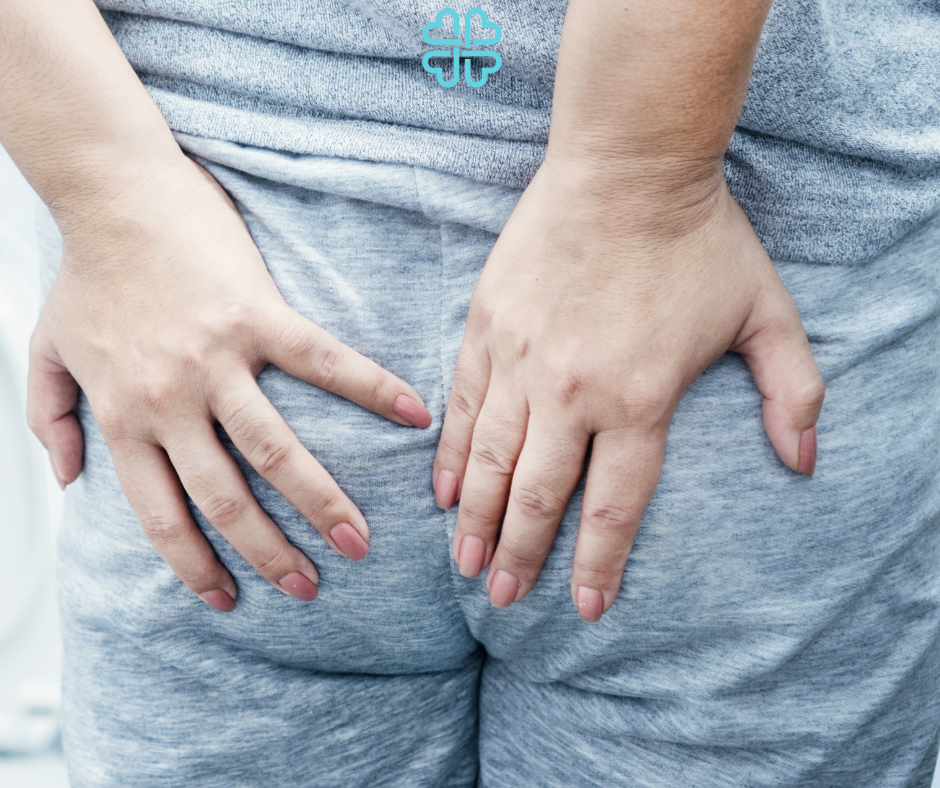
Anal pain when sitting is a symptom that can appear suddenly and make everyday functioning very difficult. The patient may not be able to sit normally, drive, work at a desk or pass stool comfortably. The cause may be perianal thrombosis, an anal fissure, an abscess, haemorrhoids or inflammation of the skin around the anus.
This article helps explain what anal pain when sitting may mean, when it is worth seeing a doctor sooner and what proctological diagnostics look like. If the pain is severe, appeared suddenly, or is accompanied by a lump, swelling, fever or bleeding, it is worth booking a proctology consultation in Gdańsk.
Author: Justyna Szul, MD, proctologist | Medical review: Dr Kamil Smok, surgeon and proctologist | Publication date: 29.06.2026 | Last updated: 29.06.2026
Why does anal pain when sitting require careful assessment?
Anal pain when sitting is not one disease. It is a symptom that may have many causes. Sometimes it is related to mild skin irritation, but sometimes it indicates an acute proctological problem that requires prompt consultation.
Patients often search for:
- “I cannot sit because of anal pain”,
- “anal pain when sitting — what could it be”,
- “sudden anal pain”,
- “anal pain and a lump”,
- “anal pain after bowel movement”,
- “throbbing anal pain and fever”.
Each of these phrases may lead to a different diagnosis. Sudden, very severe pain with a hard lump may suggest perianal thrombosis. Burning pain that worsens during bowel movements may fit an anal fissure. Increasing throbbing pain with swelling and fever may indicate a perianal abscess. That is why, instead of treating everything blindly “as haemorrhoids”, it is better to determine the cause.
“Anal pain when sitting may have different causes. The key is whether it appeared suddenly and whether it is accompanied by a lump, bleeding, fever or pain during bowel movements. These details are very helpful in making the diagnosis.”
— Justyna Szul, MD, proctologist
The most common causes of anal pain when sitting
Pain around the anus may originate from the skin, anal canal, external haemorrhoids, a fissure, an abscess or perianal tissues. Below are the most common causes, but the final diagnosis requires examination.
1. Perianal thrombosis — sudden severe pain and a hard lump
Perianal thrombosis, also called thrombosed external haemorrhoid or perianal blood clot, is one of the more common causes of sudden severe pain when sitting. Patients often describe a hard, painful, bluish or purple lump near the anus that appeared within a few hours.
The pain may be so severe that it makes sitting, walking, driving and passing stool difficult. With fresh symptoms, early consultation matters because the doctor may choose conservative treatment or consider a procedure in properly qualified patients.
You can read more about this specific problem here: perianal thrombosis — symptoms and treatment.
2. Anal fissure — pain during bowel movements and burning
An anal fissure is a tear in the lining of the anal canal. It usually causes sharp, burning pain during bowel movements, which may persist for many minutes or hours after passing stool. The patient may also feel pain while sitting, especially if sphincter tension and irritation of the anal area occur.
Typical symptoms include pain during stool, burning, spasm, fear of bowel movements and sometimes bright red blood on toilet paper. In a chronic fissure, a skin tag or sentinel tag may also appear.
More information about fissure treatment is available here: anal fissure — treatment with botulinum toxin.
3. Perianal abscess — increasing throbbing pain
A perianal abscess is an inflammatory condition with pus accumulation around the anus. The pain often increases from hour to hour or day to day. It may be throbbing, deep, worse when sitting, walking or touching the area. Swelling, redness, tenderness, fever or general malaise may also occur.
This is one of the conditions that should not be waited out. An abscess requires urgent medical assessment because procedural treatment involving incision and drainage is often necessary. Ointments, sitz baths or antibiotics without surgical assessment may be insufficient.
4. Haemorrhoids — discomfort, itching, bleeding and sometimes pain
Haemorrhoids may cause discomfort, itching, burning, rectal bleeding, a feeling of a lump or tissue prolapse during straining. Internal haemorrhoids alone often do not cause severe pain. Severe pain is more common when thrombosis, swelling, inflammation or a coexisting anal fissure is present.
If the main problem is chronic haemorrhoid symptoms, such as bleeding, prolapse, itching or recurrent discomfort, the appropriate page to explore this topic further is: haemorrhoid treatment in Gdańsk. This article focuses on pain when sitting and differentiating its causes.
5. Skin irritation and inflammation around the anus
Pain when sitting may also result from skin irritation: after diarrhoea, excessive wiping, heavy sweating, irritating cosmetics, infections, contact allergy or chronic discharge. In such cases, patients more often describe burning, stinging, itching, moisture and skin tenderness rather than deep pain.
Treatment depends on the cause. Sometimes a change in hygiene routine, skin treatment, dermatological assessment or proctological assessment is needed, especially if symptoms recur.
6. Pain not directly related to the anus
Not every pain felt in this area comes from the anal canal. Sometimes symptoms may be related to the coccyx, pelvic floor muscles, spine, neuralgia, trauma, overload or prolonged sitting. If the proctological examination does not confirm an anal cause, the doctor may suggest further diagnostics in another direction.
Anal pain when sitting — what can it mean?
| Symptom | Possible cause | What should you do? |
|---|---|---|
| sudden, very severe pain and a hard lump | perianal thrombosis | early consultation, especially in the first days |
| burning pain during bowel movements | anal fissure | diagnostics and fissure treatment |
| throbbing pain, swelling, fever | perianal abscess | urgent medical assessment |
| itching, burning, bleeding, prolapsing lump | haemorrhoids or irritation | proctological examination and disease-stage assessment |
| skin burning, moisture, stinging | skin inflammation or irritation | assessment of the skin and possible irritants |
| pain after injury, tenderness over the coccyx | coccyx pain, spine, pelvic floor muscles | medical assessment, sometimes diagnostics outside proctology |
When can anal pain when sitting indicate perianal thrombosis?
Perianal thrombosis is a common cause of sudden, intense pain. It is characteristic that the patient can often point to the moment when the problem began. The pain may appear after constipation, strong straining, lifting, exercise, prolonged sitting, travel or an episode of diarrhoea.
Typical features of perianal thrombosis include:
- sudden onset of pain,
- very severe pain when sitting,
- a hard lump near the anus,
- bluish or purple colour of the lesion,
- a feeling of pressure and tension,
- tenderness to touch,
- sometimes minor bleeding.
Important: not every painful lump is thrombosis. Similar symptoms may be caused by an abscess, inflammation, fissure or another lesion. Therefore, with severe pain, you should not cut, pierce or squeeze the lump yourself.
How can anal pain be relieved quickly?
There is no single answer for every patient because treatment depends on the cause of the pain. Perianal thrombosis, anal fissure, abscess and skin irritation are treated differently.
The most important first step is diagnosis. Only after examination can the doctor choose conservative, pharmacological, topical, procedural or urgent surgical management.
Conservative treatment
In milder situations, the doctor may recommend conservative treatment. This may include:
- painkillers selected according to the patient’s health condition,
- topical preparations to reduce pain or irritation,
- treatment of constipation and keeping stools soft,
- sitz baths or warm baths, if indicated,
- changing anal-area hygiene habits,
- limiting prolonged sitting and strong straining,
- follow-up if symptoms do not improve.
Procedural treatment
Procedural treatment may be needed in selected cases, for example with a very painful fresh perianal thrombosis or a perianal abscess. The scope of management depends on the diagnosis, duration of symptoms, pain severity, presence of swelling, fever, bleeding and the patient’s general condition.
In perianal thrombosis, a short procedure under local anaesthesia may be considered in some patients. In perianal abscess, incision and drainage are often necessary. However, “immediate improvement” should not be promised to every patient — the decision depends on examination and qualification.
What should you not do when you have anal pain when sitting?
With severe pain, it is easy to look for quick solutions online. Some home methods may temporarily relieve symptoms, but they do not replace diagnosis. Some actions may even worsen the situation.
You should not:
- pierce or cut a lump yourself,
- squeeze a lesion near the anus,
- use irritating preparations without medical advice,
- sit on the toilet for a long time,
- strain strongly during bowel movements,
- postpone a visit if pain is increasing, fever or swelling appears,
- assume that every anal pain means haemorrhoids.
“The biggest mistake is treating everything with haemorrhoid ointment without a diagnosis. In an abscess, fissure or thrombosis, the cause of pain is different and the management should also be different.”
— Dr Kamil Smok, surgeon and proctologist
When should you see a proctologist?
It is worth seeing a proctologist whenever the pain is severe, new, recurrent, worsening or makes normal functioning difficult. You do not need to wait until the problem becomes unbearable.
Seek help sooner if:
- the pain appeared suddenly,
- you cannot sit normally,
- you feel a lump near the anus,
- the lump is hard, bluish or very painful,
- pain worsens during bowel movements,
- bleeding appears,
- fever, chills, swelling or redness occur,
- pain worsens despite home treatment,
- symptoms recur,
- you are not sure whether it is a haemorrhoid, thrombosis, fissure, abscess or something else.
If the pain is very severe and accompanied by high fever, rapid deterioration of general condition, heavy bleeding, black stools, fainting or severe abdominal pain, urgent medical help may be needed.
What does a proctology consultation look like?
A proctology consultation begins with a conversation. The doctor asks about the onset of pain, its character, relation to sitting and bowel movements, presence of a lump, bleeding, itching, fever, constipation, diarrhoea, previous proctological conditions and medications used.
The examination may include:
- inspection of the anal area,
- gentle palpation, if possible,
- digital rectal examination, if needed and tolerated,
- anoscopy, if the doctor wants to assess the anal canal and the final part of the rectum,
- discussion of the diagnosis and treatment plan.
With very severe pain, the doctor adjusts the scope of examination to the situation. The goal is not to increase suffering, but to determine the cause of symptoms and choose safe management.
Who can you see at Wyspa Medycyny Przyjaznej?
At Wyspa Medycyny Przyjaznej in Gdańsk, proctology consultations are provided by doctors dealing with diagnosis and treatment of anal and rectal diseases. A patient with anal pain when sitting, a lump, bleeding, itching, burning or swelling can book an appointment with:
- Sara Godyńska, MD, proctologist,
- Justyna Szul, MD, proctologist,
- Dr Kamil Smok, surgeon and proctologist.
The visit takes place in calm conditions, with respect for intimacy and without judgement. The most important goal is to determine why it hurts and how to help the patient as safely as possible.
Frequently asked questions
Why does my anus hurt when I sit?
The cause may be perianal thrombosis, an anal fissure, an abscess, haemorrhoids, skin irritation or pain not directly related to the anus, for example from the coccyx area. Diagnosis requires examination.
Is anal pain when sitting always haemorrhoids?
No. Haemorrhoids are a common cause of symptoms, but severe pain when sitting may also result from perianal thrombosis, an anal fissure, a perianal abscess or skin inflammation.
Does perianal thrombosis hurt when sitting?
Yes. Perianal thrombosis often causes sudden, very severe pain when sitting and a hard, painful lump near the anus. With fresh symptoms, it is worth seeing a proctologist quickly.
Can anal pain go away on its own?
Sometimes yes, especially if the cause is mild irritation. However, it is not worth waiting if the pain is severe, worsening, appeared suddenly or is accompanied by a lump, bleeding, fever or swelling.
When does anal pain require urgent help?
Urgent consultation is recommended with severe increasing pain, fever, swelling, redness, a hard lump, heavy bleeding, black stools, fainting or deterioration of general condition.
Can I cut a painful lump near the anus myself?
No. You should not pierce, cut or squeeze a lump yourself. This may cause bleeding, infection and worsening pain. Such management requires medical assessment.
Which proctologist should I see in Gdańsk?
At Wyspa Medycyny Przyjaznej, consultations are provided by Sara Godyńska, MD, Justyna Szul, MD and Dr Kamil Smok. You can start with a proctology consultation in Gdańsk.
Anal pain when sitting does not go away?
Do not assume it is definitely haemorrhoids. A proctologist will assess whether the cause is perianal thrombosis, fissure, abscess, haemorrhoids, inflammation or another problem.
Book a proctology consultation →Summary
Anal pain when sitting is a symptom that should not be ignored. It most often results from proctological causes such as perianal thrombosis, anal fissure, haemorrhoids, abscess or skin irritation, but without examination it is impossible to make a responsible diagnosis.
Early consultation is especially important if the pain appeared suddenly, is very severe, makes sitting impossible, is accompanied by a lump, bleeding, fever, swelling or feeling unwell. Early diagnostics help choose the right treatment sooner and avoid accidental use of “haemorrhoid” preparations when the cause of pain is different.
If you experience anal pain when sitting, pain during bowel movements, a lump, swelling, bleeding, itching or burning, book a proctology consultation in Gdańsk.
Read also
Sources and medical context:
- American Society of Colon and Rectal Surgeons — Management of Hemorrhoids, 2024
- American Society of Colon and Rectal Surgeons — Management of Anal Fissures, 2023
- American Society of Colon and Rectal Surgeons — Management of Anorectal Abscess, Fistula-in-Ano, and Rectovaginal Fistula, 2022
- NICE NG12 — Suspected cancer: recognition and referral
- Wyspa Medycyny Przyjaznej — proctology consultation in Gdańsk
This article is for informational purposes only and does not replace medical consultation. Severe anal pain, pain when sitting, a lump, increasing swelling, fever, bleeding, black stools, fainting, unintentional weight loss, change in bowel habits or deterioration of general condition require individual medical assessment.