
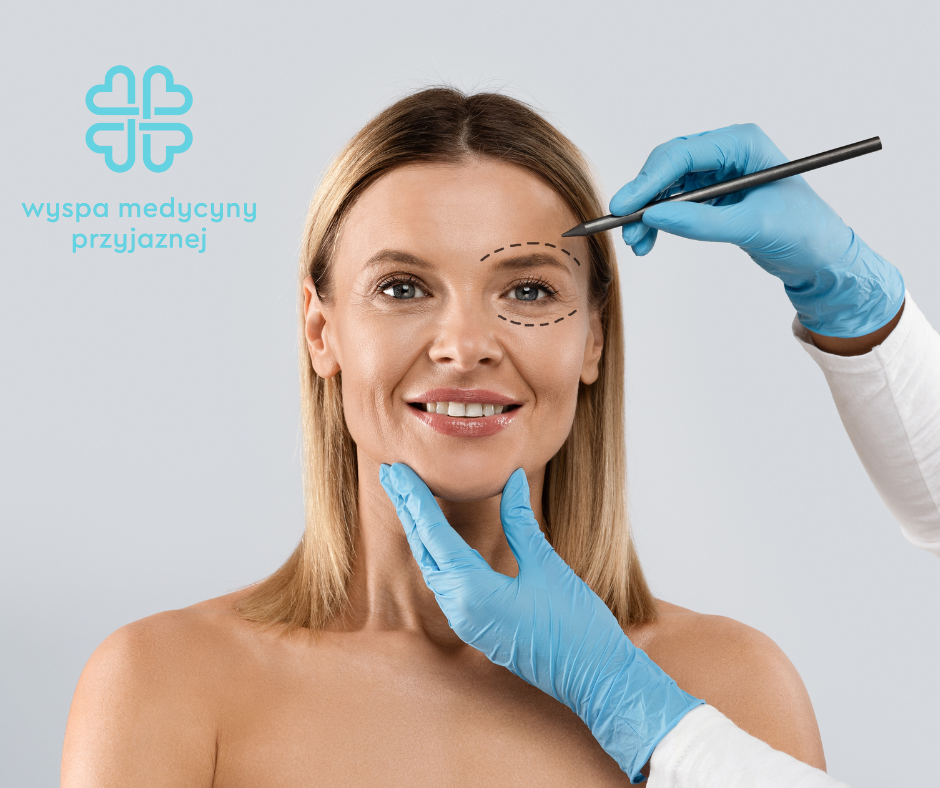
plastic surgery · outpatient procedures · Gdańsk
Minimally invasive plastic surgery — when is a smaller procedure enough, and when is an operation needed?
Informational article. If you are looking for treatment in Gdańsk, go directly to the procedure page or plastic surgery consultation page — the link is provided below.
Not every procedure intended to improve appearance has to involve major surgery, general anaesthesia and a long recovery. In many situations, outpatient procedures performed under local anaesthesia are possible, with a smaller degree of intervention and a quicker return to everyday activities.
This article explains what minimally invasive plastic surgery is, who may benefit from it, where its limitations lie and why medical eligibility assessment matters more than the name of the procedure itself. To see the procedures available at Wyspa Medycyny Przyjaznej, visit: plastic surgery in Gdańsk.
Author: Wyspa Medycyny Przyjaznej team | Medical review: to be completed by a doctor | Publication date: to be completed | Last updated: to be completed
Are you looking for a specific procedure?
This blog explains the difference between smaller outpatient procedures and conventional surgery. Details of eligibility assessment, prices, preparation and appointment availability can be found on the pages for individual procedures.
See plastic surgery in Gdańsk →What does “minimally invasive plastic surgery” mean?
The term “minimally invasive plastic surgery” usually refers to procedures involving smaller incisions, limited to a specific area of the body and generally not requiring hospital admission. Some can be performed under local anaesthesia if the scope of the procedure, the patient’s health and the doctor’s decision allow it.
In practice, patients often seek such options when they want to improve their appearance but are concerned about major surgery, a long break from work, general anaesthesia or very visible scars. It should, however, be stated clearly: “minimally invasive” does not mean “risk-free” or “suitable for everyone”. Every surgical procedure requires eligibility assessment, discussion of contraindications and realistic expectations.
“Patients often ask whether a procedure can be performed in the least invasive way possible. That is a good question, but the answer depends on anatomy, the expected result and safety. Sometimes a smaller procedure is enough, while in other cases it is more honest to explain that a different method will be needed.”
— expert comment, subject to approval by a WMP doctor
A minimally invasive procedure versus conventional surgery — what is the difference?
The difference is not limited to procedure duration. The extent of intervention, type of anaesthesia, size of incisions, expected recovery, risk of complications and whether the desired result is subtle or more extensive all matter.
| Feature | Minimally invasive / outpatient procedure | Larger plastic surgery operation |
|---|---|---|
| Extent of intervention | smaller and limited to a specific problem | broader and often involving a larger area of tissue |
| Anaesthesia | often local, sometimes with additional anti-anxiety support | sometimes general or regional, depending on the procedure |
| Time at the facility | usually outpatient | may require longer observation or hospital admission |
| Recovery | usually shorter, but depends on the procedure | usually longer and more demanding |
| Result | often subtle, natural-looking and targeted | may be more extensive and pronounced |
This does not mean that one method is always “better” than the other. The purpose of the consultation is to select an option that offers a reasonable chance of achieving the desired result without unnecessarily increasing risk.
Who may benefit from minimally invasive plastic surgery?
This approach is most often considered by patients who want to correct a specific, limited aesthetic or functional problem but do not require extensive surgery. Examples may include excess eyelid skin, the proportions of the upper lip, selected changes in the intimate area or smaller soft-tissue corrections.
A minimally invasive procedure may be considered particularly when the patient:
- expects a natural, understated change,
- has a specific problem that can be corrected within a limited scope,
- wants to avoid major surgery if it is not necessary,
- cannot take a long break from work,
- accepts that a smaller procedure may produce a more subtle result,
- has realistic expectations and understands the limitations of the method.
The final decision always depends on examination. The same problem in two patients may require completely different management.
When may a smaller procedure not be enough?
Minimally invasive surgery has limitations. If the problem is advanced, the tissues are significantly lax, asymmetry is substantial or the patient expects a very pronounced change, a smaller procedure may not provide a satisfactory result.
A broader scope of treatment may be needed when there is:
- a large amount of excess skin or tissue,
- significant skin laxity that cannot be corrected with a minor procedure,
- marked asymmetry requiring more complex planning,
- a need to reshape deeper structures rather than the skin alone,
- an expectation that cannot be met using a tissue-sparing method,
- a contraindication to an outpatient procedure.
Honest eligibility assessment also means telling the patient when a minimally invasive method is not the best choice.
Examples of procedures patients often associate with a smaller degree of intervention
The exact scope of any procedure depends on eligibility assessment. The examples below are educational and help explain which problems patients often discuss within plastic or aesthetic surgery.
| Patient concern | Possible procedure | Where can details be found? |
|---|---|---|
| drooping eyelid skin, a heavy-looking gaze | upper eyelid surgery | eyelid surgery in Gdańsk |
| a long distance between the nose and upper lip | lip lift / bullhorn lip lift | lip lift in Gdańsk |
| discomfort, chafing or asymmetry of the labia | labiaplasty | labiaplasty in Gdańsk |
| a need to determine which method is appropriate | consultation and individual eligibility assessment | plastic surgery — services |
Local anaesthesia — when is it an advantage, and when is it not enough?
Many smaller surgical procedures can be performed under local anaesthesia. This means that a specific area of the body is numbed and the patient does not require general anaesthesia. For many people, this is a major advantage: returning home is usually easier and the body is not exposed to the effects of general anaesthesia.
Local anaesthesia should not, however, be presented as the “best” option in every case. Some procedures require another type of anaesthesia for reasons of safety, comfort or surgical scope. The doctor decides after assessing the procedure, coexisting conditions, medications, allergies and the patient’s expectations.
Important: the type of anaesthesia should not be chosen solely because of fear or internet opinions. During the consultation, ask which anaesthesia options are possible in your case and what their benefits, limitations and risks are.
What does eligibility assessment involve?
Eligibility assessment is the most important stage. During the consultation, the doctor determines whether the patient’s problem can be addressed using a minimally invasive approach or whether another method is needed. Sometimes a patient arrives with a specific procedure in mind, but examination shows that a procedure with a different scope would be more appropriate.
The consultation usually covers:
- the problem the patient wants to correct,
- the expected result and whether it is realistic,
- the condition of the skin and tissues,
- previous procedures and medical conditions,
- medications, allergies and a tendency to scar,
- possible treatment methods,
- the type of anaesthesia,
- recovery time, restrictions and possible complications.
A well-conducted consultation protects the patient from an unsuitable decision and helps match the method to the actual problem rather than to a popular procedure name.
“The key issue is not whether a procedure sounds minimally invasive, but whether it is appropriately selected. A smaller procedure performed for the wrong indication may disappoint, while a larger operation performed without need may expose the patient to unnecessary burden.”
— expert comment, subject to approval by a WMP doctor
Recovery — can normal life resume immediately after a small procedure?
Recovery after a smaller procedure is usually shorter than after major surgery, but this does not mean there are no restrictions. Swelling, bruising, tenderness, skin tightness, wound-care requirements and temporary limits on physical activity may also occur after outpatient procedures.
After the procedure, the doctor may recommend:
- a reduced level of activity for the first few days,
- avoiding strenuous exercise for a specified period,
- appropriate wound hygiene,
- protecting the scar from sunlight,
- attending a follow-up appointment if scheduled,
- contacting the facility urgently in the event of severe pain, fever, purulent discharge, increasing swelling or bleeding.
The exact healing time depends on the type of procedure, the area of the body, individual predisposition and adherence to recommendations.
The most common mistakes patients make before a procedure
Patients often make decisions based on “before and after” photographs, short social-media videos or friends’ opinions. This is understandable, but in plastic surgery it may lead to disappointment.
The most common mistakes include:
- choosing a procedure by name without medical assessment,
- expecting an identical result to another person,
- underestimating healing time,
- downplaying contraindications, medications and chronic disease,
- withholding information about previous procedures,
- choosing the cheapest option without analysing eligibility and safety,
- treating “minimally invasive” as a guarantee that complications will not occur.
How should you prepare for the consultation?
It is worth coming to the consultation with a specific question: what is causing concern, for how long, what result would be satisfactory and what the patient would like to avoid. Information about chronic disease, medication, allergies, a tendency to hypertrophic scarring and previous procedures is also helpful to the doctor.
Before the appointment, prepare:
- a list of medications and supplements,
- information about chronic diseases,
- information about allergies,
- photographs or documentation of previous procedures, if applicable,
- questions about anaesthesia, healing, scars, return to work and possible complications.
Do not stop anticoagulants, antiplatelet medication or any other long-term medication without a decision from the treating doctor or operating surgeon.
Key information at a glance
- Minimally invasive plastic surgery usually means a smaller procedure, but not an absence of risk.
- Not every aesthetic problem can be corrected with a minor procedure.
- Local anaesthesia may be beneficial, but it is not always possible or sufficient.
- Medical eligibility assessment is more important than the name of the procedure.
- Results depend on anatomy, the extent of the procedure, healing and realistic expectations.
- This blog does not replace the service page, price list or individual consultation.
Frequently asked questions
Is minimally invasive plastic surgery safe?
It can be safe when the patient is properly assessed, the procedure is performed by a suitably trained doctor and the patient follows the recommendations. This does not mean there is no risk. Possible complications include swelling, bruising, infection, bleeding, asymmetry, dissatisfaction with the result and problems with healing.
Can every procedure be performed under local anaesthesia?
No. Many smaller procedures can be performed under local anaesthesia, but a different type of anaesthesia may be needed for a larger operation. The doctor makes the decision after eligibility assessment.
Can I return to work immediately after a minimally invasive procedure?
A return to light activities may sometimes be quick, but it depends on the procedure, area of the body and individual response. Swelling, bruising or sutures may be visible after some procedures, so the timing of returning to work should be discussed during the consultation.
Does a smaller procedure produce a worse result than a larger operation?
Not always. If the problem is well matched to the method, a smaller procedure can produce a very satisfactory and natural result. If the problem is advanced, however, too limited a procedure may not be enough.
How should I choose the right procedure?
It is best to start with a consultation rather than selecting a specific procedure online. The doctor will assess the problem, suggest possible methods and explain which option makes the most sense in the individual case.
Where can I book a plastic surgery consultation in Gdańsk?
At Wyspa Medycyny Przyjaznej, you can start with the plastic surgery in Gdańsk page or visit a specific procedure page if you already know which concern you would like to discuss.
Are you unsure whether you need a small procedure or a larger operation?
The safest starting point is a consultation. The doctor will assess the problem, discuss the available methods and explain whether a minimally invasive procedure is likely to be sufficient.
Go to WMP plastic surgery →Summary
Minimally invasive plastic surgery may be a good option for patients who want to correct a specific aesthetic or functional problem without extensive surgery. Its advantages may include a smaller degree of intervention, the possibility of performing selected procedures on an outpatient basis and a shorter recovery.
It is not suitable for everyone and does not replace conventional operations when the problem is more advanced. Individual eligibility assessment is the most important factor: anatomy, expectations, safety, anaesthesia and the possible result all need to be considered.
If you are considering a procedure in Gdańsk, start with the plastic surgery at Wyspa Medycyny Przyjaznej page or a specific procedure page.
You may also be interested in
Sources and medical context:
- American Society of Plastic Surgeons — information about selected procedures performed under local anaesthesia / “awake plastic surgery”
- American Society of Anesthesiologists — risks and adverse effects of different types of anaesthesia
- NHS — what to consider before a cosmetic or surgical procedure
- Wyspa Medycyny Przyjaznej — plastic surgery in Gdańsk
This article is informational and does not replace a medical consultation. The doctor decides on eligibility, method, type of anaesthesia, scope of the procedure, contraindications and possible results during the appointment. Outcomes and recovery are individual.